Key takeaways
- Looped and dangling cords can be a strangulation hazard.
- Cordless lift removes the hazard at its source.
- Motorized and wand controls are also cord-free.
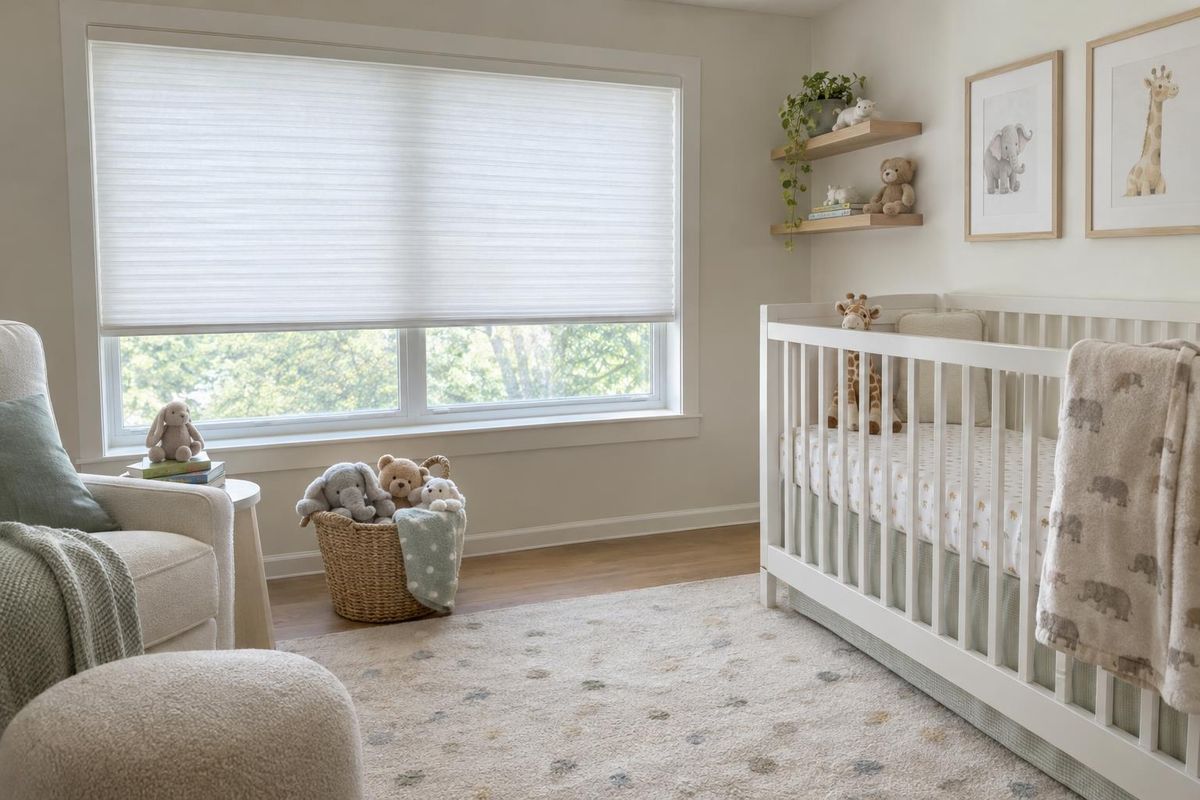
- Keep cribs and furniture away from windows and cords.
The risk
Window blind and shade cords can form loops that a young child can reach. Consumer safety organizations have long warned about this hazard. The safest approach is to avoid accessible cords altogether in rooms where young children spend time.
Pets can also become tangled in long cords.
Cordless options
Cordless lift systems raise and lower the treatment by hand with no cords. Many blinds, cellular shades, roller shades and Roman shades come in cordless versions. Motorized treatments operate by remote with no cords, and wands tilt blinds without loops.
Cordless operation also looks cleaner.
If you already have corded blinds
Where you cannot replace blinds right away, keep cords short and out of reach, use cord cleats or tension devices and move cribs, beds and furniture away from windows.
Replacing corded treatments in children's rooms and play areas is the stronger step.
Planning a safer home
Check each room for cords and loops, starting with nurseries and bedrooms. In Nashville and surrounding areas, we help families choose cordless and motorized treatments and replace risky ones.
Look to consumer safety organizations for current guidance as well.
Quick answers
Are all cordless blinds safe?
Cordless operation removes the cord hazard, but products and homes vary. Follow the manufacturer's guidance and current safety recommendations.
Do cordless shades work on tall windows?
Very tall windows can be hard to lift by hand. Motorized shades are a good answer.
Can corded blinds be converted?
Sometimes. Often replacing the blind is more reliable.